Ending Explained (Spoilers)
What Scarlet Deer Inn's finale is doing
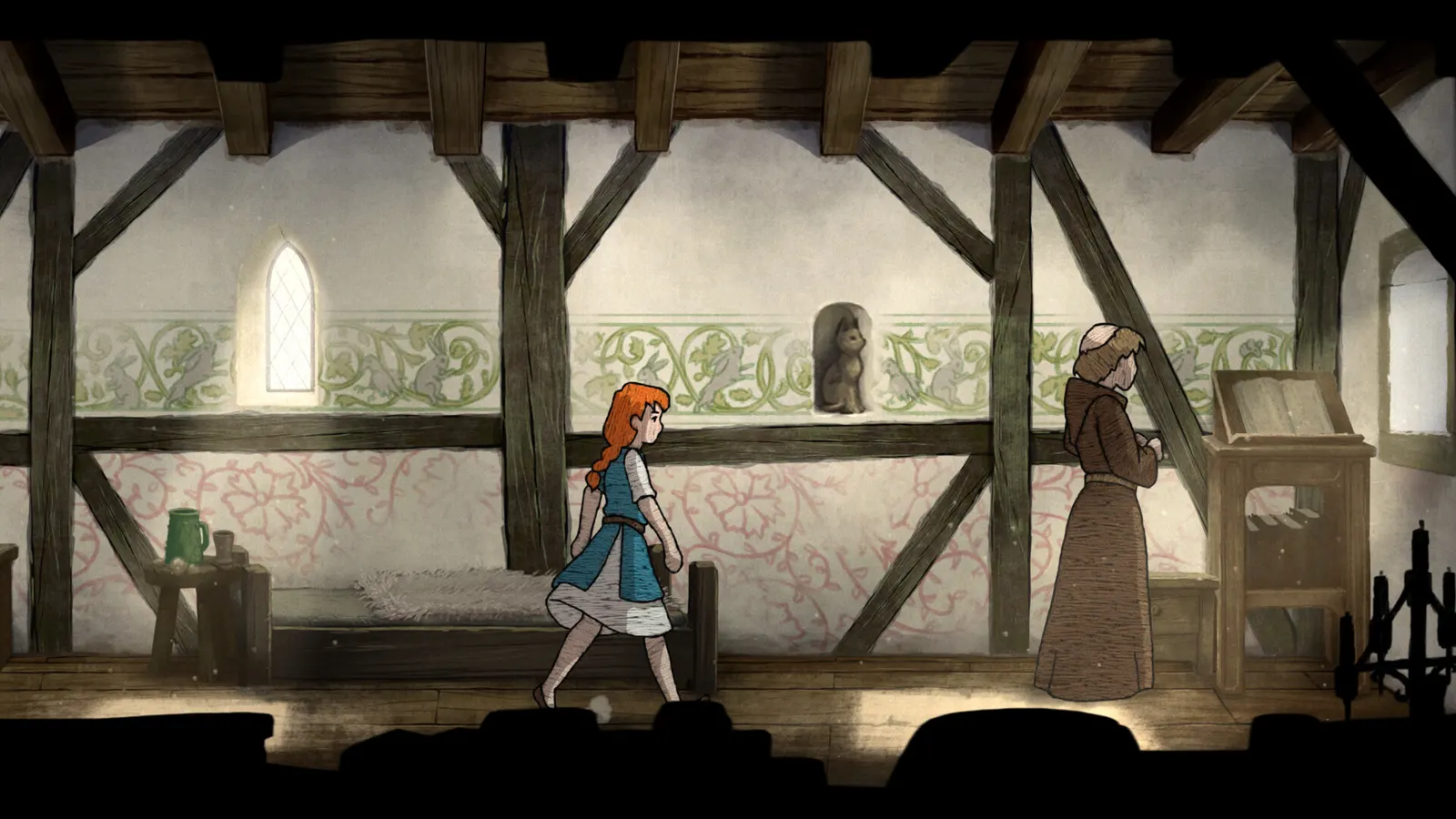
Scarlet Deer Inn Ending Explained
HEAVY SPOILERS. Turn back if you have not finished the underground escape. For mechanical steps with labeled spoilers, use How to Complete the Ending. For myth context, use Noon Witch folklore.
Spoiler warning (again)
This page discusses the Noon Witch taking Kuba and Bara, the meaning of escaping with Horace, and how the village opening was always setup for loss. Mature themes include stylized violence and child loss.
What happens, in plain terms
Elise’s journey runs village care → Karel’s cellar horror → pit → labyrinth survival → escape with Horace. The finale does not restore the opening’s innocence. The Noon Witch takes Kuba and Bara. Your mechanical victory (light, routes, escape) coexists with narrative devastation.
That double outcome is the point, not a scripting mistake.
Why Horace matters in the ending
Horace begins as Kuba’s toy horse and ends as a portable remainder of the child-world. Escaping with Horace is both a gameplay objective and a symbolic salvage: something beloved is carried out of darkness even when the children themselves are taken by folklore threat. The toy is not a consolation prize that undoes grief; it is a wound you can hold.
Toys page: Toys & Collectibles.
How the opening village recontextualizes
Dorota’s errands, cakes for Karel/Otto/Lada, Father Johannes, and the oak tree are not filler. They establish a social fabric that can be torn. Karel’s friendly placement in the cake triad makes the apiary descent feel like betrayal by proximity — evil did not need a distant castle.
Village: Village. Apiary: Karel’s Apiary.
Underground as moral architecture
Braziers and chase creatures externalize parenting under threat: keep light on the path, keep danger back, keep moving toward a child-linked objective. When players die to greed (looting mid-chase), the systems echo the story’s warning about attention.
The Noon Witch’s role
Within Slavic folklore framing, the Noon Witch (Polednice-adjacent myth space) is associated with heat, midday danger, and harm to children. Scarlet Deer Inn adapts that fear into its narrative climax: the witch takes Kuba and Bara. The embroidered art style refuses gore tourism; it aims for stylized dread.
Does anyone “win”?
Mechanically, yes — you can complete escape and credits. Thematically, the game refuses a clean win screen for the heart. Attu Games wants the player to feel the cost of a world where toys remain and children do not.
If that is too far for you, Who Should Play is the boundary page to share with others.
Collectibles after knowledge
Finding the rag doll and shepherd’s flute after understanding the ending can feel sharper. Cleanup runs are optional; emotional self-protection is allowed. Tools: Collectible tracker, Achievement checklist.
Alternate endings?
This wiki does not invent multiple secret endings without verification. Complete the main story path; treat toys/achievements as completion layers unless Steam or the developers document otherwise.
A reading that stays grounded
Scarlet Deer Inn is about domestic competence colliding with mythic injustice. Elise can do every errand right and still face a folklore outcome she cannot errand away. The torch helps you see. It does not make the world fair.
After you finish
- Read folklore context if you want cultural grounding
- Use review pages if you want critical distance: Full Review
- Return to Characters to notice foreshadowing you missed
The ending hurts because the village worked. That is the cruelest kind of design — and the most honest for this story.
Symbol stack that pays off
Cakes (community), church words (naming fear), oak pause (threshold), pit (irreversibility), torch (care under threat), Horace (portable childhood), witch (folklore taking). The ending works because each symbol was introduced before it was spent.
Why stylization matters ethically
Stylized violence and embroidered forms keep the game from turning child-loss into spectacle. You still should not treat it as casual content. The restraint is craft, not denial.
Player skill as theme
Learning shortcuts and braziers is the mechanical rhyme of “prepare the path for those you love.” Failing those lessons makes chase deaths; succeeding still cannot guarantee mythic fairness. Systems cannot solve folklore.
Aftercare media choices
If you want distance, the full review helps. If you want culture context, folklore page helps. If you want tasks, trackers help. Pick one lane; do not do all three while raw.
Spoiler hygiene with others
Say “the ending is heavy” freely. Say what the Noon Witch does to Kuba and Bara only when asked for spoilers. This page is opt-in pain.
Frequently Asked Questions
Quick answers tied to this page.
Does this page spoil the whole ending?
Yes. It is explicitly a heavy-spoiler explanation.
What happens to Kuba and Bara?
The Noon Witch takes them. Escape with Horace does not undo that loss.
Why is Horace in the finale?
He is a carried remnant of the child-world and a gameplay escape objective with symbolic weight.
Is there a happy ending?
Expect a mechanically completable ending that still centers grief and folklore cost.
Are there multiple endings?
Do not assume secret endings without evidence. Finish the main path and use trackers for completion extras.
Where are mechanical finale steps?
How to Complete the Ending.